Estate Planning for Blended Families in Miami, Florida
Estate planning for blended families presents unique challenges that standard estate plans often fail to address. When one or both spouses have children from a prior marriage, the competing interests of the surviving spouse and the children from the prior marriage must be carefully balanced. Without proper planning, a surviving spouse may inherit everything and leave nothing to the deceased spouse's children, or conversely, children from a prior marriage may receive their inheritance immediately while the surviving spouse is left without adequate financial support. At the Law Offices of Albert Goodwin, PA, we help blended families throughout South Florida create estate plans that protect every family member's interests.
The Central Problem: Spouse vs. Children from a Prior Marriage
The fundamental challenge in blended family estate planning is that the interests of the surviving spouse and the children from the prior marriage are often in direct conflict. Consider a common scenario: John marries Susan, his second wife. John has two adult children from his first marriage. John wants to ensure that Susan is financially secure after his death, but he also wants his children to eventually inherit his assets. If John leaves everything to Susan outright, Susan has no legal obligation to leave anything to John's children. Susan could spend the inheritance, give it to her own children, or leave it to a new partner. If John leaves everything directly to his children, Susan may be left without sufficient resources.
This problem is compounded by Florida's elective share statute, which guarantees a surviving spouse a minimum share of the deceased spouse's estate regardless of what the will or trust provides. Without proper planning, the elective share can disrupt even the most carefully crafted estate plan.
QTIP Trusts: The Primary Tool for Blended Families
The qualified terminable interest property (QTIP) trust is the most commonly used tool for balancing the interests of a surviving spouse and children from a prior marriage. A QTIP trust provides income to the surviving spouse for life while preserving the trust principal for the children from the prior marriage (or other designated remainder beneficiaries).
In a QTIP trust, the deceased spouse's assets are held in trust for the benefit of the surviving spouse. The surviving spouse must receive all of the trust income, distributed at least annually, for the rest of their life. The trustee may also be given discretion to distribute principal to the surviving spouse for health, education, maintenance, and support. When the surviving spouse dies, the remaining trust assets pass to the remainder beneficiaries designated by the first spouse to die, typically the children from the prior marriage.
The key advantage of a QTIP trust is that the first spouse to die controls the ultimate disposition of the trust assets. The surviving spouse cannot change the remainder beneficiaries, cannot withdraw the trust principal beyond what the trust terms allow, and cannot divert the assets to their own children or a new spouse. This ensures that the first spouse's children will ultimately receive the inheritance their parent intended for them.
For federal estate tax purposes, assets in a QTIP trust qualify for the marital deduction, meaning that no estate tax is owed on the assets transferred to the QTIP trust at the first spouse's death. The trust assets are instead included in the surviving spouse's estate at their death, at which point the applicable estate tax exemption and any other planning strategies can be applied.
Florida's Elective Share and Blended Family Planning
Florida Statutes § 732.2065 provides that a surviving spouse is entitled to an elective share equal to 30 percent of the decedent's "elective estate." The elective estate includes not only assets passing through probate but also assets in revocable trusts, joint accounts, payable-on-death accounts, and certain other transfers. This broad definition means that simply placing assets in a revocable trust does not avoid the elective share.
For blended family planning, the elective share creates both a challenge and an opportunity. If the deceased spouse's estate plan does not adequately provide for the surviving spouse, the surviving spouse can elect to take their 30 percent share, potentially disrupting the intended distribution to the children from the prior marriage. On the other hand, if the estate plan is structured to satisfy the elective share through a QTIP trust or other spousal trust, the elective share claim may be neutralized because the surviving spouse is receiving adequate provision.
Under F.S. § 732.2125, property that qualifies for the marital deduction under federal estate tax law, including property held in a QTIP trust, counts toward satisfaction of the elective share. This means that a well-structured QTIP trust can simultaneously provide for the surviving spouse, preserve the remainder for the children, qualify for the marital deduction, and satisfy the elective share.
Prenuptial and Postnuptial Agreements
For many blended families, a prenuptial or postnuptial agreement is an essential complement to the estate plan. Under Florida Statutes § 732.702, a surviving spouse may waive the right to the elective share, homestead rights, exempt property, family allowance, and preference in appointment as personal representative through a written agreement signed before or after the marriage. This waiver must be made knowingly and voluntarily, with full disclosure of the other party's assets and financial circumstances.
A prenuptial agreement can provide clarity and certainty for both spouses and their respective children. Each spouse can agree to keep their separate property separate, waive the elective share, and acknowledge the other spouse's right to leave their assets to their own children. This eliminates the risk that a surviving spouse will exercise the elective share and claim a portion of the deceased spouse's estate that was intended for the children.
Without a prenuptial agreement, the surviving spouse's elective share rights remain intact, and the estate plan must be designed to account for the possibility that the surviving spouse may exercise those rights. Even with a QTIP trust in place, if the surviving spouse is dissatisfied with the trust provisions, they may elect against the estate and claim their 30 percent share, potentially disrupting the plan. A prenuptial waiver prevents this scenario.
Providing for Both the Spouse and Children
Beyond the QTIP trust, several other strategies can be used to provide for both the surviving spouse and the children from a prior marriage:
Separate trusts for separate assets. Each spouse can create a separate revocable trust that holds their individual assets and directs the disposition of those assets at death. Assets acquired during the marriage can be divided between the trusts according to the prenuptial agreement or the couple's wishes. This approach maintains a clear separation between each spouse's assets and ensures that each spouse's children receive the assets their parent intended for them.
Life insurance. A life insurance policy can provide the surviving spouse with a source of funds that is separate from the assets intended for the children. For example, a husband with children from a prior marriage could purchase a life insurance policy naming his wife as beneficiary, providing her with immediate financial security, while leaving the remainder of his assets in a trust for his children. The life insurance proceeds can be held in an irrevocable trust to keep them out of the husband's taxable estate.
Specific bequests. The estate plan can include specific bequests of particular assets to specific beneficiaries. For example, the family home could be left in trust for the surviving spouse's use during their lifetime, with the remainder passing to the children, while personal property, heirlooms, and specific financial accounts are left directly to the children.
Discretionary trusts. A discretionary trust gives the trustee flexibility to make distributions based on the beneficiaries' needs and circumstances. This can be particularly useful when the surviving spouse's financial needs are uncertain and the estate planner wants to ensure that the spouse is provided for without giving the spouse unlimited access to the trust assets.
Homestead Considerations for Blended Families
Florida's homestead laws create additional complications for blended families. Under Article X, Section 4(c) of the Florida Constitution, if the homeowner is survived by a spouse or minor child, the homestead property cannot be devised to anyone other than the spouse. This means that if a married homeowner dies and is survived by a spouse, the homeowner cannot leave the home directly to the children from a prior marriage, even if that is their wish.
The surviving spouse has the option under F.S. § 732.401 to take either a life estate in the homestead property (with the remainder passing to the decedent's descendants) or an undivided one-half interest in the property as a tenant in common with the decedent's descendants. Neither of these options may be ideal for the blended family. A life estate may give the surviving spouse use of the home for life but may create tension with stepchildren who are waiting to inherit. A tenancy in common may force a partition action if the co-owners cannot agree on the use or disposition of the property.
A prenuptial agreement in which the spouse waives homestead rights can resolve this issue, allowing the homeowner to devise the home as they wish. Alternatively, the homeowner can sell the home before death and distribute the proceeds through the trust, or the estate plan can include provisions for the purchase of a replacement home for the surviving spouse using trust funds or life insurance proceeds.
Choosing the Right Trustee
In blended family estate planning, the choice of trustee is especially important. The trustee of a QTIP trust or other trust that serves both the surviving spouse and the children from a prior marriage must balance the interests of both groups, which may be in tension. If a child from the prior marriage is named as trustee, the surviving spouse may fear that the trustee will favor the remaindermen at the expense of the income beneficiary. If the surviving spouse is named as trustee, the children may fear that the spouse will deplete the trust assets.
For this reason, many blended family estate plans use an independent trustee, such as a professional fiduciary, a trust company, or a trusted advisor who is not a family member. An independent trustee can make objective decisions about distributions and investments without the personal conflicts that family members may face. Some plans use co-trustees, combining a family member with an independent professional to provide both personal knowledge and objective judgment.
Contact a Florida Blended Family Estate Planning Attorney
Estate planning for a blended family requires careful attention to the competing interests of your spouse and your children from a prior relationship. A well-designed plan can provide for everyone you care about while preventing disputes and ensuring that your wishes are honored. At the Law Offices of Albert Goodwin, PA, we have extensive experience creating estate plans for blended families that address elective share concerns, homestead issues, and the unique dynamics of second marriages. Our office is located at 121 Alhambra Plz #1000, Coral Gables, FL 33134. Call us at 786-522-1411 or email us at [email protected] to schedule a consultation about your estate plan.
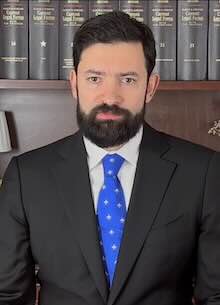
About the Author
Albert Goodwin Esq. is a licensed Florida attorney with over 18 years of courtroom experience. His extensive knowledge and expertise make him well-qualified to write authoritative articles on a wide range of legal topics. He can be reached at 786-522-1411 or [email protected].