Intestate Succession in Miami, Florida
When a Florida resident dies without a valid will, their estate is distributed according to the state's intestate succession laws found in Chapter 732 of the Florida Statutes. Intestate succession determines who inherits a decedent's probate assets based on their family relationships. At the Law Offices of Albert Goodwin, PA, we represent families and beneficiaries throughout the intestate estate administration process, ensuring that assets are distributed in accordance with Florida law.
What Is Intestate Succession?
Intestate succession is the legal framework that dictates how a person's estate is distributed when they die without a will -- or when their will fails to dispose of all of their assets. Under F.S. § 732.101, any part of the estate not effectively disposed of by will passes to the decedent's heirs as prescribed by Florida's intestacy statutes. Intestate succession only applies to probate assets -- property titled solely in the decedent's name without a beneficiary designation. Assets held in a trust, jointly owned property with rights of survivorship, life insurance proceeds with named beneficiaries, and payable-on-death accounts pass outside of probate regardless of whether a will exists.
The Surviving Spouse's Share
Under Florida law, the surviving spouse receives a significant share of the intestate estate. The exact share depends on whether the decedent left surviving descendants, and whether those descendants are also descendants of the surviving spouse. F.S. § 732.102 establishes the following rules:
Spouse with No Surviving Descendants
If the decedent is survived by a spouse but no descendants (children, grandchildren, or more remote lineal descendants), the surviving spouse inherits the entire intestate estate.
Spouse and Descendants -- All Shared
If the decedent is survived by a spouse and descendants, and all of the decedent's descendants are also descendants of the surviving spouse, and the surviving spouse has no other descendants, the surviving spouse receives the entire intestate estate. This is the common scenario where a married couple has children together and neither spouse has children from a prior relationship.
Spouse and Descendants -- Not All Shared
If the decedent is survived by a spouse and descendants, and either the decedent has descendants who are not descendants of the surviving spouse, or the surviving spouse has descendants who are not descendants of the decedent, the surviving spouse receives one-half of the intestate estate. The remaining one-half passes to the decedent's descendants. This rule applies in blended family situations where either spouse has children from a prior relationship.
Descendants' Share (Per Stirpes Distribution)
When the decedent's descendants inherit -- whether the entire estate or a portion after the surviving spouse's share -- the distribution is made per stirpes under F.S. § 732.104. Per stirpes is a Latin term meaning "by the roots" or "by the branch," and it is the default method of distribution in Florida intestacy.
Under per stirpes distribution, the estate is divided into equal shares at the first generational level where there are living descendants. Each living descendant at that level takes one share. If a descendant at that level has predeceased the decedent but left their own descendants, those descendants collectively take the deceased ancestor's share, divided equally among them.
Example: A decedent has three children: A, B, and C. Child B predeceased the decedent, leaving two children (grandchildren of the decedent). Under per stirpes distribution, the estate is divided into three equal shares. Child A takes one-third, Child C takes one-third, and Child B's two children each take one-sixth (splitting their parent's one-third share).
Order of Inheritance When There Is No Surviving Spouse
When the decedent dies without a surviving spouse, F.S. §§ 732.103 and 732.104 establish a strict order of priority for inheritance:
- Descendants -- The decedent's children, grandchildren, and more remote descendants inherit first, distributed per stirpes
- Parents -- If there are no surviving descendants, the estate passes equally to the decedent's surviving parents, or entirely to the sole surviving parent
- Siblings and their descendants -- If there are no surviving descendants or parents, the estate passes to the decedent's brothers and sisters and their descendants per stirpes
- Grandparents and their descendants -- If none of the above survive, the estate is divided in half: one half to the decedent's maternal grandparents (or the survivor of them, or if none, to their descendants per stirpes) and one half to the paternal grandparents (under the same rules). If there are no surviving relatives on one side, the entire estate goes to the other side
- Escheat to the State -- If no heirs can be identified after a diligent search, the estate escheats (reverts) to the State of Florida under F.S. § 732.107
Homestead Property and Intestate Succession
One of the most important distinctions in Florida intestacy law involves homestead property. Under Article X, Section 4 of the Florida Constitution, homestead property is subject to special rules that override the general intestate succession framework. Homestead property cannot be freely devised by will if the decedent is survived by a spouse or minor child, and it is also treated differently when there is no will.
When a homestead owner dies intestate and is survived by a spouse and descendants, the surviving spouse has the right to either:
- A life estate in the homestead property, with the remainder passing in fee simple to the decedent's descendants, or
- An undivided one-half interest in the homestead as a tenant in common with the decedent's descendants
This election is governed by F.S. § 732.401. If the decedent is survived by a spouse but no descendants, the surviving spouse inherits the homestead property in fee simple. These homestead descent rules are constitutionally mandated and cannot be altered by ordinary legislation.
Homestead property is also exempt from the claims of the decedent's creditors (except for mortgages, property taxes, and mechanics' liens), making it one of the most protected assets in a Florida estate.
Exempt Property and Family Allowance
In addition to the intestate share and homestead protections, Florida law provides two further protections for the surviving spouse and family:
Exempt Property
Under F.S. § 732.402, the surviving spouse (or, if there is no surviving spouse, the decedent's children) is entitled to certain exempt property from the estate, including:
- Household furniture, furnishings, and appliances in the decedent's usual place of abode, up to a net value of $20,000
- Two motor vehicles as defined by Florida law that were regularly used by the decedent or members of the decedent's immediate family
- All qualified tuition programs authorized by Section 529 of the Internal Revenue Code
Exempt property has priority over all claims against the estate except the family allowance, homestead rights, and the costs of estate administration. These items pass to the surviving family members regardless of the provisions of a will or the intestacy statutes.
Family Allowance
Under F.S. § 732.403, the surviving spouse and the decedent's minor children whom the decedent was obligated to support are entitled to a reasonable allowance from the estate for their maintenance during the period of administration. The family allowance cannot exceed $18,000 and is payable in a lump sum or in periodic installments. Like exempt property, the family allowance has priority over most claims against the estate and is designed to provide financial support to the family while the estate is being administered.
Special Issues in Intestate Succession
Adopted Children
Under F.S. § 732.108, a legally adopted person is treated as a natural descendant of the adopting parent for purposes of intestate succession. The adopted child inherits from and through the adoptive parent just as a biological child would. However, a person adopted by a non-relative generally does not inherit from their biological parents through intestacy.
Afterborn Heirs
Descendants of the decedent who are conceived before the decedent's death but born after are treated as if they had been born during the decedent's lifetime for purposes of intestate succession under F.S. § 732.106. This ensures that a child born shortly after a parent's death is not disinherited.
Half-Blood Relatives
Under F.S. § 732.105, relatives of the half blood (who share only one parent with the decedent, rather than both) inherit the same share as relatives of the whole blood. Florida does not reduce the share of half-siblings or other half-blood relatives.
Why Estate Planning Matters
Intestate succession provides a default plan for distributing your assets, but it may not reflect your actual wishes. Florida's intestacy laws do not account for:
- Unmarried partners or domestic partners who are not legally married
- Stepchildren who were never formally adopted
- Close friends, charitable organizations, or other non-relatives you may wish to benefit
- Specific bequests of personal items, heirlooms, or sentimental property
- Minimizing estate taxes, probate costs, and administrative delays
Creating a comprehensive estate plan that includes a valid last will and testament -- and possibly a revocable living trust -- allows you to control exactly how your assets are distributed and who manages your estate. It also provides the opportunity to name guardians for minor children, establish trusts for beneficiaries with special needs, and take advantage of tax planning strategies.
Contact Our Florida Intestate Succession Attorneys
If a loved one has died without a will in Florida, or if you want to ensure your own estate does not pass through intestacy, the experienced attorneys at the Law Offices of Albert Goodwin, PA can help. We guide families through every step of the probate process, whether there is a will or not, and we help individuals create estate plans that protect their families and reflect their wishes.
Contact us today for a consultation:
- Phone: 786-522-1411
- Email: [email protected]
- Address: 121 Alhambra Plz # 1000, Coral Gables, FL 33134
We serve clients throughout Miami-Dade, Broward, and Palm Beach counties in all matters related to intestate succession, probate administration, and estate planning.
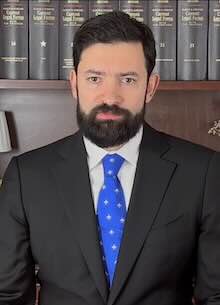
About the Author
Albert Goodwin Esq. is a licensed Florida attorney with over 18 years of courtroom experience. His extensive knowledge and expertise make him well-qualified to write authoritative articles on a wide range of legal topics. He can be reached at 786-522-1411 or [email protected].