Attorney for Forced Heirship Homestead Claims
The intersection of homestead protection and forced heirship rules creates some of the most complex and emotionally charged disputes in Miami probate and estate law. When a homeowner passes away leaving a surviving spouse or minor child, powerful constitutional protections take effect that can override the deceased's own wishes as expressed in a will. If you are a surviving spouse, a minor child's guardian, or a family member navigating one of these disputes, understanding your rights is essential. Our Miami attorneys concentrate on forced heirship homestead claims, helping clients protect their inheritance, preserve the family home, and resolve these sensitive matters efficiently.
Forced heirship homestead claims arise from a unique combination of protections written directly into Florida's Constitution and statutes. These protections are designed to keep families in their homes and prevent surviving spouses and minor children from being disinherited from the family residence. Because these rules are automatic and often supersede a will, they frequently surprise families who assumed a valid will would control everything. Whether you are seeking to enforce your rights or defend against an unexpected claim, our firm provides the experienced guidance Miami families need.
Understanding Homestead Protection Under Florida Law
Homestead protection in Florida serves three distinct legal purposes, and understanding the difference is critical to any forced heirship dispute. The first is protection from creditors, which shields the primary residence from most forced sales to satisfy debts. The second is a tax exemption that reduces property taxes for qualifying homeowners. The third, and most relevant to forced heirship claims, involves restrictions on how homestead property can be transferred or devised when the owner dies leaving a surviving spouse or minor child.
For property to qualify as homestead in Miami, it must be the owner's permanent primary residence. Homestead status is not automatically limited by acreage within municipal boundaries in the same way it is elsewhere, but the property must genuinely serve as the decedent's home. When a property qualifies as protected homestead, special constitutional rules govern who inherits it, regardless of what the owner's will says. This is the heart of what makes forced heirship homestead claims so distinctive.
What Is Forced Heirship in the Context of Homestead?
Forced heirship refers to the legal principle that certain heirs, particularly surviving spouses and minor children, cannot be freely disinherited from homestead property. Florida's Constitution places strict limits on the owner's ability to leave the homestead to anyone other than these protected family members. If a person dies leaving a surviving spouse or a minor child, they generally cannot devise the homestead to a third party, a friend, an adult child alone, or a trust in a way that cuts out the protected heirs.
When someone attempts to devise homestead property in violation of these restrictions, the devise is considered invalid. Instead of the property passing according to the will, it passes according to specific rules set out in Florida statutes. This is where disputes commonly erupt. A surviving spouse may believe they are entitled to full ownership, while adult children from a prior marriage believe they are entitled to a share. A guardian for a minor child may need to protect that child's interest against competing claims. These conflicts require careful legal analysis and, frequently, litigation.
How Homestead Passes When There Is a Surviving Spouse
Florida law provides a specific framework for how homestead descends when the decedent leaves a surviving spouse. If the decedent is survived by a spouse and no descendants, the spouse generally receives the entire homestead. However, when the decedent leaves both a surviving spouse and descendants, the outcome becomes more complicated and is one of the most frequently litigated aspects of Miami homestead law.
Historically, the surviving spouse received only a life estate in the homestead, with the descendants receiving the remainder interest. This arrangement often created friction because the spouse could live in the home for life but could not sell it or fully control it, while the children held an interest they could not immediately use. To address these problems, Florida law now allows the surviving spouse to make an important election.
The Surviving Spouse's Election
Rather than being locked into a life estate, a surviving spouse may elect to take an undivided one-half interest in the homestead as a tenant in common with the descendants. This election gives the spouse an outright ownership share that can be sold or transferred, which frequently provides a more practical and equitable result. The election, however, must be made within a specific time period after the decedent's death. Missing this deadline can permanently forfeit the more favorable option, which is why prompt legal advice is so important.
Our attorneys carefully evaluate each client's circumstances to determine whether taking the life estate or making the election to receive a one-half interest better serves their interests. This decision depends on factors such as the client's age, financial needs, the value and condition of the property, and the relationships among the heirs. We guide surviving spouses through this analysis and ensure that any election is properly and timely filed.
Protecting the Rights of Minor Children
Minor children enjoy strong protection under Florida homestead law. If a decedent is survived by a minor child, the owner generally cannot devise the homestead at all, even to the surviving spouse in some circumstances. The presence of a minor child dramatically limits the estate planning options that were available during the owner's lifetime and can invalidate provisions in a will that would otherwise be enforceable.
These protections exist to ensure that minor children are not left without a home. However, they can also create complicated situations, particularly in blended families or when a surviving spouse and children have differing interests. A guardian representing a minor child must be diligent in asserting the child's homestead rights. Our firm regularly assists guardians and family members in ensuring that a minor child's constitutional homestead interest is fully recognized and protected throughout the probate process.
Common Situations That Lead to Forced Heirship Homestead Disputes
Forced heirship homestead claims arise in a wide range of family and financial situations. Recognizing these scenarios can help Miami families anticipate potential disputes and seek counsel before conflicts escalate.
- Blended families: When a decedent has children from a prior relationship and a current spouse, competing homestead claims are common. The spouse's rights and the children's remainder interests must be reconciled.
- Invalid devises: A will that attempts to leave the homestead to someone other than the protected heirs, such as a sibling, a charity, or a trust, may trigger a forced heirship claim that redirects the property.
- Improperly funded trusts: Homeowners sometimes transfer their residence into a revocable trust without accounting for homestead restrictions, creating confusion about how the property should pass at death.
- Second marriages later in life: When an older individual remarries, the interplay between the new spouse's homestead rights and the adult children's expectations often produces litigation.
- Disputes over homestead status: Parties may disagree about whether the property qualified as protected homestead at all, which affects whether forced heirship rules apply.
Each of these situations requires a detailed factual and legal review. Small differences in the ownership structure, the family composition, or the timing of events can change the outcome entirely.
Waiver of Homestead Rights
Homestead rights can, in certain circumstances, be waived. A surviving spouse may waive homestead protections through a valid marital agreement, such as a prenuptial or postnuptial agreement, provided the waiver meets legal requirements. These agreements must be executed properly and, in many cases, must include fair disclosure of assets. When a valid waiver exists, it can significantly alter how the homestead passes and may allow the decedent's will to control the property.
Disputes frequently arise over whether a waiver is valid and enforceable. A surviving spouse may argue that a purported waiver was signed under duress, without adequate disclosure, or in a manner that does not satisfy statutory requirements. Conversely, other heirs may seek to enforce a waiver to claim a larger share of the property. Our attorneys carefully examine marital agreements and other documents to determine whether homestead rights have been effectively waived and to advocate for our clients accordingly.
The Probate Process and Homestead Determinations
Homestead status is typically confirmed during the probate administration in Miami. A personal representative or an interested party may petition the court to determine whether the property qualifies as protected homestead. This determination affects not only who inherits the property but also whether the property is subject to the claims of the decedent's creditors. Protected homestead generally passes to heirs free of most creditor claims, which is a significant benefit for surviving family members.
The petition to determine homestead status requires supporting evidence about the decedent's residency, the nature of the property, and the family relationships involved. Contested homestead determinations can involve testimony, documentary evidence, and legal briefing. Our firm handles these petitions from start to finish, presenting the strongest possible case for our clients whether we are establishing homestead status, challenging it, or defending a client's inheritance rights.
How Our Miami Attorneys Handle Forced Heirship Homestead Claims
Successfully resolving a forced heirship homestead claim requires a thorough understanding of Florida constitutional law, statutory descent rules, probate procedure, and the practical realities of family disputes. Our approach combines careful legal analysis with a commitment to protecting our clients' interests and, when possible, preserving family relationships.
Comprehensive Case Evaluation
We begin by gathering all relevant documents, including the will, any trust instruments, deeds, marital agreements, and probate filings. We identify the surviving spouse, descendants, and any minor children whose rights may be implicated. From this foundation, we assess whether the property qualifies as protected homestead and how the forced heirship rules apply to your specific circumstances.
Strategic Guidance on Elections and Deadlines
Because several critical rights, including the surviving spouse's election, are subject to strict deadlines, we act promptly to preserve every available option. We explain the practical consequences of each choice so our clients can make informed decisions with confidence.
Negotiation and Litigation
Many homestead disputes can be resolved through negotiation, mediation, or family settlement agreements that avoid the expense and stress of prolonged litigation. When a fair resolution is possible, we pursue it vigorously. When the other parties are unwilling to recognize our client's rights, we are fully prepared to litigate the matter in probate court and advocate aggressively for the outcome our client deserves.
Why Prompt Legal Action Matters
Time is a decisive factor in forced heirship homestead claims. Important rights can be lost if elections are not made or claims are not asserted within the required periods. In addition, the longer a dispute lingers, the more expensive and contentious it can become. Property values may change, relationships may deteriorate, and evidence may become harder to gather. By consulting an attorney early, you protect your rights and position yourself for the most favorable outcome.
If you are a surviving spouse uncertain about your rights in the family home, a parent or guardian concerned about a minor child's interest, or an adult child worried that a will has attempted to give away property that should pass to you, do not wait to seek advice. These matters are governed by rules that are not always intuitive, and well-intentioned assumptions can lead to costly mistakes.
Frequently Asked Questions About Forced Heirship Homestead Claims
Can a will override homestead protections in Miami?
Generally, no. When a decedent is survived by a spouse or minor child, the constitutional homestead restrictions limit how the property can be devised. A will that attempts to leave the homestead to someone other than the protected heirs may be invalid as to the homestead, and the property will instead pass according to the statutory rules.
What happens if the homestead was placed in a trust?
Placing a homestead in a revocable trust does not automatically eliminate homestead protections or forced heirship rules. Courts examine the substance of the arrangement to determine whether the transfer violated homestead restrictions. These situations are complex and often require legal intervention to resolve.
How long does a surviving spouse have to make the election?
The surviving spouse's election to take an undivided one-half interest rather than a life estate must be made within a specific statutory time period following the decedent's death. Because missing this deadline can forfeit valuable rights, surviving spouses should consult an attorney as soon as possible.
Are creditors able to force a sale of the homestead?
Protected homestead generally passes to qualifying heirs free from most creditor claims. This is one of the significant advantages of homestead status and is another reason why properly determining homestead status during probate is so important.
Contact a Miami Forced Heirship Homestead Claims Attorney
Forced heirship homestead claims combine some of the most protective and inflexible rules in Florida law with the sensitive realities of family loss and inheritance. Whether you are seeking to enforce your homestead rights, respond to an unexpected claim, or simply understand where you stand, our Miami attorneys are ready to help. We provide clear guidance, strategic advocacy, and dedicated representation tailored to your family's circumstances.
Protecting the family home and honoring the rights of surviving spouses and children is at the core of what we do. Contact our firm today to schedule a consultation and take the first step toward resolving your forced heirship homestead matter with confidence and clarity.
You can contact us by phone at 786-522-1411 or by email at [email protected].
About the Author
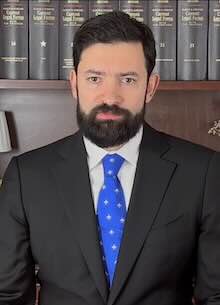
Albert Goodwin Esq. is a licensed Florida attorney with over 18 years of courtroom experience. His extensive knowledge and expertise make him well-qualified to write authoritative articles on a wide range of legal topics. He can be reached at 786-522-1411 or [email protected].