Florida Statutes Chapter 732 Florida Statutes Chapter 732: Probate Code: Intestate Succession and Wills
mdash; Probate Code: Intestate Succession and Wills in MiamiFlorida Statutes Chapter 732 is one of the most consequential chapters of the Florida Probate Code for anyone who owns property, has a family, or wants to control the distribution of their assets after death. Spanning six distinct parts, Chapter 732 governs intestate succession (what happens when someone dies without a valid will), the elective share rights of a surviving spouse, the protections afforded to pretermitted spouses and children, exempt property and allowances, the formal requirements for creating and revoking wills, and the rules courts use to interpret testamentary documents. At the Law Offices of Albert Goodwin, PA, we counsel clients throughout Miami-Dade County, Broward County, and Palm Beach County on every aspect of Chapter 732 and help them structure their estate plans to achieve their goals within the framework Florida law provides.
Overview of Chapter 732 and Why It Matters
Chapter 732 operates as the default distribution scheme for every Florida resident who passes away. Even if you have a will, Chapter 732 still plays a major role because it establishes the rights a surviving spouse cannot be deprived of (the elective share), the property that is automatically exempt from claims of creditors, and the rules courts apply when interpreting ambiguous will provisions. For individuals who die without any estate plan at all, Chapter 732 dictates entirely who receives their property and in what proportions.
Understanding Chapter 732 is essential whether you are drafting a will, serving as a personal representative, or asserting your rights as an heir or surviving spouse during Florida probate proceedings. Below, we walk through each part of the chapter in detail.
Part I: Intestate Succession (§§ 732.101–732.111)
Part I of Chapter 732 establishes who inherits when a Florida resident dies without a valid will, a situation known as dying “intestate.” These rules apply to any probate assets that are not otherwise disposed of by will, trust, beneficiary designation, or joint ownership arrangement. In Miami-Dade County, a significant number of estates pass through intestacy, often because the decedent never executed a will or because the will was found to be invalid.
Intestate Estate (§ 732.101)
Under Section 732.101, any part of a decedent's estate that is not effectively disposed of by will passes to the decedent's heirs as prescribed in Chapter 732. This applies to the entire estate if there is no will, or to any portion of the estate not covered by the will. The intestate estate does not include non-probate assets such as property held in a revocable trust, jointly held property with rights of survivorship, or assets with valid beneficiary designations.
Share of the Surviving Spouse (§ 732.102)
The surviving spouse's intestate share depends on whether the decedent left surviving descendants and the relationship of those descendants to the surviving spouse:
- If the decedent has no surviving descendants, the surviving spouse receives the entire intestate estate.
- If the decedent's descendants are also all descendants of the surviving spouse and the surviving spouse has no other descendants, the surviving spouse receives the entire intestate estate.
- If the decedent's descendants are also all descendants of the surviving spouse but the surviving spouse has one or more additional descendants who are not descendants of the decedent, the surviving spouse receives one-half of the intestate estate.
- If one or more of the decedent's surviving descendants are not descendants of the surviving spouse, the surviving spouse receives one-half of the intestate estate.
These rules reflect the Florida Legislature's recognition that blended families (which are extremely common in South Florida) create situations where the interests of a surviving spouse and stepchildren may diverge. Understanding how Section 732.102 applies to your specific family structure is essential when deciding whether a will or trust is necessary to override the default distribution scheme.
Share of Other Heirs (§ 732.103)
When there is no surviving spouse, or when only a portion of the estate passes to the surviving spouse, the remaining intestate estate passes to the decedent's heirs in the following order of priority:
- Descendants of the decedent (children, grandchildren, great-grandchildren)
- If no descendants, to the decedent's father and mother equally, or to the survivor of them
- If no descendants and no surviving parents, to the decedent's brothers and sisters and their descendants
- If none of the above, the estate is divided equally, one-half to the decedent's paternal kindred and one-half to the maternal kindred, following a specific order through grandparents, aunts, uncles, and their descendants
Per Stirpes Distribution (§ 732.104)
Florida follows a per stirpes method of distribution, meaning that the estate is divided into equal shares at the first generational level that has living members, and the share of any deceased member at that level passes down to that person's own descendants by representation. For example, if a decedent had three children and one predeceased the decedent leaving two grandchildren, the estate would be divided into three shares: one for each surviving child and one split between the two grandchildren of the predeceased child. This ensures that each family line receives an equal portion regardless of whether a member of that line has died.
Half-Blood Relatives and Afterborn Heirs (§§ 732.105, 732.106)
Half-blood relatives (those sharing only one parent with the decedent) inherit equally with whole-blood relatives under Florida law. Additionally, relatives of the decedent who are conceived before the decedent's death but born afterward (afterborn heirs) inherit as if they had been born during the decedent's lifetime, provided they survive at least 120 hours after birth.
Escheat to the State (§ 732.107)
If a decedent leaves no surviving spouse, no descendants, no parents, no siblings or their descendants, and no other kindred who qualify as heirs under the statute, the estate escheats to the State of Florida. The funds are deposited into the State School Fund. While escheat is rare, it highlights why having a valid will is important for every Florida resident.
Part II: Elective Share of the Surviving Spouse (§§ 732.201–732.2155)
Part II of Chapter 732 is one of the most significant protections available to a surviving spouse under Florida law. Regardless of what a decedent's will says, the surviving spouse has the right to claim an elective share equal to 30% of the elective estate. This right exists to prevent a decedent from completely disinheriting a surviving spouse.
Right of Election (§ 732.201)
The surviving spouse of a person who dies domiciled in Florida has the right to a share of the elective estate equal to 30% of the elective estate. This right exists regardless of whether the decedent left a will, and it can override the provisions of the will if the elective share amount exceeds what the spouse would otherwise receive.
What Is Included in the Elective Estate (§ 732.2035)
The elective estate is broader than the probate estate alone. Under Section 732.2035, the elective estate includes:
- The decedent's probate estate
- The decedent's interest in accounts or securities registered in transfer-on-death or payable-on-death form
- The decedent's fractional interest in property held as tenants in common
- Property held in revocable trusts, including the decedent's revocable trust assets
- Property transferred by the decedent during the one-year period preceding death where the decedent retained the right to possession or income
- Net cash surrender value of life insurance policies owned by the decedent
- The value of certain pension, profit-sharing, and deferred compensation arrangements
This broad definition prevents a decedent from circumventing the elective share by placing assets into trusts or other non-probate arrangements shortly before death. It is a particularly important consideration for estate planning in South Florida, where substantial assets are frequently held in revocable trusts.
Satisfaction of the Elective Share and Waiver (§§ 732.2075, 732.2155)
The elective share is first satisfied from assets the surviving spouse already receives from the estate through the will, intestacy, or other transfers. Only if those amounts fall short of 30% of the elective estate does the surviving spouse receive additional assets from the estate. Under Section 732.2155, a surviving spouse may waive the right to the elective share through a valid prenuptial or postnuptial agreement that complies with Florida law. These waivers must be executed voluntarily, with full financial disclosure from both parties, and are subject to judicial scrutiny for fairness.
Part III: Pretermitted Spouse and Children (§§ 732.301–732.302)
Part III protects a spouse or child who was not provided for in the decedent's will because the will was executed before the marriage occurred or before the child was born or adopted.
Pretermitted Spouse (§ 732.301)
If a person marries after executing a will and the will does not provide for the new spouse, the surviving spouse is entitled to a share of the estate equal to what they would have received had the decedent died intestate, unless it appears from the will or other evidence that the omission was intentional, or the decedent provided for the spouse outside the will in lieu of a testamentary provision. This situation is surprisingly common in Miami, where individuals may remarry later in life without updating their existing estate plan. A pretermitted spouse's share can substantially reduce the bequests to other beneficiaries named in the will.
Pretermitted Children (§ 732.302)
Similarly, if a child is born or adopted after the execution of a will and the will does not provide for that child, the child receives a share of the estate equal to what they would have received under intestacy, unless the omission was intentional or the decedent provided for the child outside the will. The share of the pretermitted child is taken proportionally from the shares of the other beneficiaries. These provisions emphasize why it is critical to update your will after any major life event, including marriage, divorce, the birth of a child, or an adoption.
Part IV: Exempt Property and Allowances (§§ 732.401–732.403)
Part IV of Chapter 732 provides important protections for the surviving spouse and minor children by designating certain property as exempt from the claims of estate creditors and ensuring basic financial support during the administration of the estate.
Homestead (§ 732.401)
Florida's homestead protection is among the strongest in the nation and is rooted in both the Florida Constitution (Article X, Section 4) and Chapter 732. A decedent's homestead property is exempt from forced sale and from the claims of creditors (other than mortgages, liens for work performed on the property, and property taxes). When a decedent is survived by a spouse, the surviving spouse may elect to take a life estate in the homestead property with a vested remainder in the decedent's descendants, or the surviving spouse may elect to take an undivided one-half interest in the homestead as a tenant in common with the decedent's descendants. If there are no surviving descendants, the surviving spouse takes the homestead property in fee simple.
Homestead also imposes restrictions on a testator's ability to devise the property. If the owner is survived by a spouse or minor child, the homestead cannot be devised to anyone other than the spouse (subject to certain exceptions). Violations of this restriction are among the most frequently litigated issues in Miami-Dade County probate proceedings. Proper homestead planning is essential for every Florida homeowner.
Exempt Personal Property (§ 732.402)
In addition to homestead, the surviving spouse (or, if there is no surviving spouse, the decedent's children) is entitled to exempt personal property consisting of household furniture, furnishings, and appliances in the decedent's usual place of abode, up to a net value of $20,000 as of the date of death, plus all automobiles held in the decedent's name and regularly used by the decedent or members of the decedent's immediate family. This exempt personal property is in addition to any share passing to the surviving spouse or children under the will or by intestacy, and it is not subject to the claims of creditors (except for perfected security interests and liens).
Family Allowance (§ 732.403)
The surviving spouse and the decedent's lineal heirs whom the decedent was obligated to support are entitled to a reasonable allowance in money from the estate during the period of administration. The family allowance is intended to cover the living expenses of the surviving family during the time it takes to administer the estate, which in Miami-Dade County can take six months to over a year for a formal administration. The family allowance is payable from the estate in priority over all claims except the personal representative's fees and costs of administration, and it may not exceed a total of $18,000. The court has discretion to determine the appropriate amount and duration of the family allowance.
Part V: Wills (§§ 732.501–732.518)
Part V of Chapter 732 establishes the formal requirements for creating, executing, and revoking wills in Florida. Understanding these requirements is critical because even a minor defect in execution can render a will invalid, causing the estate to pass under the intestacy rules of Part I.
Who May Make a Will (§ 732.501)
Any person who is 18 years of age or older and of sound mind may make a will in Florida. “Sound mind” means the testator must understand the nature and extent of their property, the natural objects of their bounty (their family and those who would ordinarily be expected to share in their estate), and the nature of the testamentary act they are performing. Challenges to testamentary capacity are common in will contest litigation, particularly in cases involving elderly testators or those with cognitive impairment.
Execution Requirements (§ 732.502)
To be valid, a Florida will must meet all of the following requirements:
- The will must be in writing
- The will must be signed by the testator at the end, or by another person in the testator's presence and at the testator's direction
- The testator's signing must be done in the presence of at least two attesting witnesses
- The attesting witnesses must sign the will in the presence of the testator and in the presence of each other
Florida does not recognize holographic (handwritten, unwitnessed) wills or oral (nuncupative) wills. Every will must be properly witnessed to be admitted to probate in Florida. This is a critical distinction from some other states that do recognize holographic wills, and it is a frequent source of problems for individuals who relocate to South Florida from states with less stringent execution requirements.
Self-Proving Wills (§ 732.503)
A will may be made self-proving at the time of execution or at any later date by the acknowledgment of the testator and the affidavits of the witnesses, each made before a notary public. A self-proving will may be admitted to probate without the testimony of the attesting witnesses, which simplifies the probate process considerably. We strongly recommend that all wills be made self-proving at the time of execution to avoid potential complications if a witness is unavailable or cannot be located at the time of probate.
Who May Witness a Will (§ 732.504)
Any person who is competent to be a witness may act as an attesting witness to a will. A will is not invalidated because it is signed by an interested witness (a witness who is also a beneficiary under the will), but an interested witness may be required to forfeit their bequest to the extent it exceeds what they would have received under intestacy, unless there are at least two other disinterested attesting witnesses. For this reason, it is best practice to use disinterested witnesses, individuals who have no financial interest in the estate.
Revocation of Wills (§ 732.505)
A will or codicil, or any part of either, may be revoked by the testator in one of two ways:
- By a subsequent will, codicil, or other writing executed with the same formalities required for the execution of a will
- By a physical act (burning, tearing, canceling, defacing, obliterating, or destroying the will) performed by the testator or by another person in the testator's presence and at the testator's direction
Partial revocation by physical act is recognized in Florida. For example, a testator may cross out a specific bequest in a will without revoking the entire document, though this practice is not recommended because it can lead to disputes about the testator's intent.
Codicils (§ 732.506)
A codicil is a supplement or addition to a will that modifies, explains, or adds to the will's provisions. A codicil must be executed with the same formalities as a will (writing, testator's signature, two witnesses). A codicil that refers to a previous will has the effect of republishing the will as modified by the codicil. While codicils were historically common, modern estate planning practice generally favors revoking the prior will entirely and executing a new will to avoid confusion and potential inconsistencies between the original will and multiple codicils.
Effect of Divorce on Wills (§ 732.507)
Under Section 732.507, upon the divorce or annulment of the testator's marriage, all provisions in the will in favor of the testator's former spouse become void. The will is read as if the former spouse had predeceased the testator. This automatic revocation applies to bequests, fiduciary appointments, and powers of appointment in favor of the former spouse. However, the will is not revoked in its entirety, only the provisions benefiting the former spouse are affected. Despite this statutory protection, it is strongly advisable to execute a new will immediately following a divorce to ensure your estate plan reflects your current intentions.
Foreign Wills and Validity (§§ 732.502(2), 732.513)
Florida recognizes wills executed in other states or countries if the will was executed in compliance with the law of the state or country where it was executed, or in compliance with the law of the state or country where the testator was domiciled at the time of execution or at the time of death. This is particularly relevant in Miami, which has a large international population. A will executed in a Latin American country, for example, may be admitted to probate in Florida if it was validly executed under the laws of that country, even if it would not meet Florida's formal execution requirements.
Part VI: Rules of Construction (§§ 732.6005–732.616)
Part VI of Chapter 732 provides the rules that Florida courts use to interpret wills when the testator's intent is unclear or when circumstances have changed since the will was executed.
General Rules (§ 732.6005)
The rules of construction in Part VI apply to all wills unless the will expressly provides otherwise. The overriding principle is that the testator's intent, as expressed in the will, controls. The rules of construction serve as default interpretive guidelines that courts apply only when the will itself does not address a particular issue.
Antilapse Statute (§ 732.603)
One of the most important rules of construction is the antilapse provision. If a beneficiary named in a will predeceases the testator, the bequest to that beneficiary does not automatically lapse. Instead, if the predeceased beneficiary was a grandparent or a descendant of a grandparent of the testator, the bequest passes to the predeceased beneficiary's surviving descendants who take by representation. This prevents the unintended result of a bequest failing simply because the named beneficiary died before the testator.
Ademption and Abatement (§§ 732.604, 732.612)
Ademption occurs when property specifically bequeathed in a will is no longer part of the estate at the time of the testator's death. Under Florida law, if specifically devised property is not in the estate at death, the beneficiary of that specific devise generally receives nothing with respect to that bequest, unless the will provides otherwise or an exception applies. Abatement refers to the order in which bequests are reduced when the estate is insufficient to satisfy all bequests and pay all debts and expenses. Florida law provides a specific order of abatement: intestate property first, then residuary devises, then general devises, and finally specific devises.
Additional Rules of Construction
Part VI also addresses matters such as the construction of provisions referring to “heirs” or “next of kin” (§ 732.608), the effect of a will provision on non-probate transfers (§ 732.6065), and how ambiguities in wills are resolved. These rules frequently come into play in contested probate proceedings where beneficiaries disagree about the testator's intent.
How Chapter 732 Interacts with the Florida Trust Code (Chapter 736)
While Chapter 732 governs wills and intestate succession, the Florida Trust Code found in Chapter 736 governs the creation, administration, and termination of trusts. These two chapters interact in several important ways:
- Pour-over wills: A will may direct that probate assets be distributed to a revocable trust established during the testator's lifetime. The terms of the trust, governed by Chapter 736, then control the ultimate distribution. This is a common estate planning technique in South Florida.
- Elective share calculations: As discussed above, the elective estate under Chapter 732 includes assets held in revocable trusts. In practice, even though trust assets are administered under Chapter 736, they are factored into the elective share calculation under Chapter 732.
- Homestead: If a decedent attempts to place homestead property into a revocable trust to circumvent the devising restrictions of Chapter 732, the constitutional homestead protections still apply. The trust provisions must comply with the same restrictions that would apply to a devise by will.
- Creditor protections: The exempt property protections under Chapter 732 apply to probate assets, while Chapter 736 contains its own provisions regarding creditor access to trust assets. Coordinating these protections requires careful planning.
- Fiduciary duties: Both personal representatives (governed by the Probate Code) and trustees (governed by Chapter 736) owe fiduciary duties to beneficiaries. When the same individual serves in both capacities, understanding the distinct obligations under each chapter is essential. Disputes over fiduciary conduct may give rise to claims for breach of fiduciary duty or contested estate accountings.
Effective estate planning in Florida requires a comprehensive understanding of both Chapter 732 and Chapter 736, as well as the interplay between them. An estate plan that relies solely on a will without considering trust-based planning may leave assets exposed to unnecessary probate costs, delays, and the risk of litigation.
Why You Need an Attorney for Chapter 732 Matters
Chapter 732 affects virtually every Florida resident, whether they realize it or not. If you die without a will, Chapter 732 determines who inherits your property. If you do have a will, Chapter 732 governs how that will is interpreted and enforced, and it provides your surviving spouse with rights that cannot be overridden by the will alone. If you are serving as a personal representative, you must apply Chapter 732 correctly when distributing estate assets. And if you are a beneficiary or heir, understanding Chapter 732 is essential to knowing what you are entitled to receive.
At the Law Offices of Albert Goodwin, PA, we assist clients with all matters arising under Florida Statutes Chapter 732, including:
- Drafting and executing wills that comply with Part V requirements
- Estate planning to minimize the impact of intestacy and maximize asset protection
- Elective share claims and defenses
- Pretermitted spouse and pretermitted child claims
- Homestead protection planning and litigation
- Will contests and challenges to testamentary capacity
- Probate administration and intestate estate proceedings
- Trust litigation involving the intersection of Chapter 732 and Chapter 736
Contact Our Coral Gables Estate Law Office
If you have questions about how Florida Statutes Chapter 732 affects your estate, your inheritance rights, or your responsibilities as a personal representative, we encourage you to contact our office for a consultation. The Law Offices of Albert Goodwin, PA is located at 121 Alhambra Plz #1000, Coral Gables, FL 33134, and we serve clients throughout Miami-Dade County, Broward County, and Palm Beach County. You can reach us by phone at 786-522-1411 or by email at [email protected]. Our attorneys are prepared to help you understand your rights and options under Florida's Probate Code and to develop an estate plan that protects you and your family.
About the Author
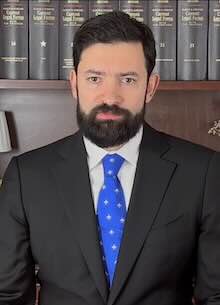
Albert Goodwin Esq. is a licensed Florida attorney with over 18 years of courtroom experience. His extensive knowledge and experience make him well-qualified to write authoritative articles on a wide range of legal topics. He can be reached at 786-522-1411 or [email protected].