Lack of Testamentary Capacity in Miami, Florida
Lack of testamentary capacity is one of the most frequently raised grounds for challenging the validity of a will or trust in Florida. When a person lacks the mental ability to understand what they are doing when they sign a will, trust, or other estate planning document, that document may be declared invalid. Florida law sets specific standards for the level of mental capacity required to execute different types of estate documents, and those standards are often at the center of contested probate proceedings.
At the Law Offices of Albert Goodwin, PA, we represent clients in capacity disputes throughout South Florida. Whether you are challenging an estate document because you believe the decedent lacked the mental ability to execute it, or you are defending the validity of a will or trust against such a challenge, our firm provides the experienced legal representation these cases demand.
Florida's Legal Standard for Testamentary Capacity
Under Florida law, a person must be of "sound mind" to execute a valid will. F.S. § 732.501 provides that any person who is of sound mind and who is 18 years of age or older may make a will. While the statute uses the term "sound mind," Florida courts have developed a more detailed test through decades of case law that defines exactly what testamentary capacity requires.
To have testamentary capacity in Florida, a testator must, at the time of executing the will, have the mental ability to understand:
- The nature and extent of the property – The testator must have a general understanding of what they own, including the approximate nature and value of their assets. The testator does not need to know the exact dollar value of every asset, but they must have a reasonable awareness of the scope of their estate.
- The natural objects of their bounty – The testator must know who the natural recipients of their estate would be, such as a spouse, children, grandchildren, or other close family members. The testator does not need to leave anything to these individuals, but they must be aware of who they are and their relationship to the testator.
- The nature of the testamentary act – The testator must understand that they are signing a will and that the will directs how their property will be distributed after death.
- How these elements relate to one another to form an orderly plan of disposition – The testator must be able to bring these concepts together and understand how the will operates to distribute their property to the intended beneficiaries.
It is important to recognize that the standard for testamentary capacity in Florida is relatively low compared to the capacity required for other legal acts, such as entering into a contract. A person may have diminished mental faculties and still possess sufficient testamentary capacity to execute a valid will. Old age, physical frailty, failing memory, and even a diagnosis of dementia do not automatically render a person incapable of making a will.
Capacity to Create or Amend a Trust
Under F.S. § 736.0402, a settlor must have capacity to create a trust. For a revocable trust that is essentially a will substitute, Florida courts generally apply the same testamentary capacity standard described above. For an irrevocable trust, however, a higher standard of capacity may apply because creating an irrevocable trust involves making a present transfer of property—an act more akin to entering a contract than making a testamentary disposition. In such cases, the settlor may need to demonstrate contractual capacity, which requires a greater degree of mental acuity than testamentary capacity.
Capacity challenges to trusts are handled through trust contest proceedings and follow many of the same evidentiary principles as will contests.
Capacity for Other Estate Planning Documents
Different estate planning documents may require different levels of capacity under Florida law. A durable power of attorney, health care surrogate designation, or deed generally requires contractual capacity, which is a higher standard than testamentary capacity. This means it is possible for a person to have sufficient capacity to execute a will but lack the capacity to sign a power of attorney or transfer real property. Understanding these distinctions is critical in estate litigation involving multiple documents executed around the same period.
Medical Conditions That May Affect Capacity
A wide range of medical conditions can impair a person's mental capacity and become relevant in will and trust contests. Some of the most commonly encountered conditions include:
- Alzheimer's disease – Alzheimer's is a progressive neurodegenerative condition that gradually destroys memory and cognitive function. In the early stages, a person with Alzheimer's may still retain testamentary capacity. As the disease progresses to moderate and severe stages, the person's ability to understand their property, recognize family members, and comprehend the nature of a will is increasingly compromised. Medical records documenting the stage of the disease at the time the will was executed are critical evidence in these cases.
- Vascular dementia – Unlike Alzheimer's, vascular dementia often results from strokes or other conditions that impair blood flow to the brain. Cognitive decline may be sudden rather than gradual, and a person's capacity may fluctuate significantly from day to day or even hour to hour. This fluctuation is particularly relevant to the lucid interval doctrine discussed below.
- Parkinson's disease – While primarily known as a movement disorder, Parkinson's disease can also cause cognitive impairment, particularly in its later stages. Parkinson's disease dementia affects reasoning, memory, and judgment, and medications used to treat Parkinson's may also affect cognition.
- Mental illness – Conditions such as severe depression, bipolar disorder, schizophrenia, and psychotic disorders can affect a person's capacity to execute estate documents. A diagnosis of mental illness does not automatically render a person incapable, but if the illness produces delusions that directly affect the testamentary disposition—such as a paranoid belief that a child is trying to harm the testator—the resulting will may be vulnerable to challenge.
- Medication effects – Prescription medications, particularly opioids, benzodiazepines, sedatives, and certain psychiatric medications, can impair cognitive function. If a will or trust was executed while the person was under the influence of medications that affected their mental clarity, this may support a lack of capacity challenge.
- Delirium – Delirium is an acute state of confusion that can result from infection, surgery, hospitalization, medication changes, or other medical conditions. A person experiencing delirium may lack capacity even if their underlying cognitive function is intact. Wills or trusts executed during a period of delirium are particularly susceptible to challenge.
The Lucid Interval Doctrine in Florida
Florida recognizes the doctrine of the "lucid interval," which holds that a person who generally lacks testamentary capacity may still execute a valid will during a temporary period of mental clarity. Even individuals with advanced dementia or other serious cognitive conditions may experience periods when their thinking clears and they are able to understand their property, recognize their family, and comprehend the nature of a will.
The lucid interval doctrine works in favor of upholding a will's validity. If the proponent of the will can establish that the testator was experiencing a lucid interval at the time the will was executed, the will may be upheld even if the testator was generally incapacitated before and after the execution. Evidence of a lucid interval may include testimony from the attorney who drafted the will, the witnesses who observed the execution ceremony, medical professionals who examined the testator around the relevant date, and family members or caregivers who interacted with the testator that day.
Conversely, the contestant in a will contest may attempt to show that the purported lucid interval did not actually occur, or that any apparent clarity was superficial and did not rise to the level of true testamentary capacity. Medical expert testimony is often essential in resolving disputes over whether a genuine lucid interval existed.
Burden of Proof in Florida Capacity Challenges
In Florida, there is a presumption that every person is competent to make a will. The party challenging the will—the contestant—bears the burden of proving that the testator lacked testamentary capacity at the time the will was executed. Under F.S. § 733.107, the contestant must establish lack of capacity by a preponderance of the evidence.
This presumption of competence is a meaningful advantage for the proponent of the will. Even if the testator had a diagnosis of Alzheimer's disease or another cognitive condition, the contestant must still produce sufficient evidence to show that the condition had progressed to the point where the testator could not meet the four-part testamentary capacity standard at the specific time the will was signed. General evidence of decline is not enough—the focus is on the testator's mental state at the moment of execution.
If the will was supervised by an attorney who met with the testator, assessed the testator's understanding, and documented the testator's capacity, this can be powerful evidence supporting the will's validity. The testimony of the attesting witnesses and the supervising attorney carries significant weight in Florida probate proceedings.
Insane Delusion
Closely related to lack of capacity is the doctrine of "insane delusion." Under Florida law, a will may be invalidated if the testator was suffering from an insane delusion that materially affected the testamentary disposition. An insane delusion is a false belief that the testator adheres to despite all evidence and reason to the contrary. A mere mistake of fact or an unreasonable belief is not necessarily an insane delusion—the belief must be one that no rational person could hold given the available evidence.
For example, if a testator disinherits a loyal and devoted child because of a delusional belief that the child was conspiring against the testator, and there is no rational basis for that belief, the will may be challenged on the ground of insane delusion. The contestant must show that the delusion existed at the time the will was executed and that the delusion directly affected the distribution of the estate.
How Capacity Challenges Are Litigated in Florida Probate Court
Capacity challenges in Florida are litigated through the probate court system. The process typically involves the following stages:
- Filing objections – Under F.S. § 733.212, an interested person who has been served with a notice of administration must file a formal objection to the will within the applicable deadline, generally 20 days or in some cases 3 months. The objection must identify lack of capacity as a ground for the challenge.
- Discovery – Both sides engage in extensive discovery to gather evidence relevant to the testator's capacity. This includes obtaining medical records, deposing treating physicians, family members, caregivers, the drafting attorney, and the attesting witnesses. Financial records and correspondence may also be relevant to establishing the testator's mental state.
- Expert witnesses – Capacity cases frequently involve expert medical testimony. Forensic psychiatrists, neurologists, or neuropsychologists may be retained to review medical records and offer opinions on whether the testator had testamentary capacity at the time the will was executed. Both sides often retain their own experts, and the battle of the experts can be a decisive factor in these cases.
- Mediation – Florida courts frequently require mediation before a capacity dispute goes to trial. Mediation provides an opportunity for the parties to reach a negotiated resolution without the expense and uncertainty of a trial.
- Trial – If the case is not resolved through mediation or settlement, it proceeds to a bench trial before the probate judge. Florida probate proceedings are tried to the court, not a jury. The judge will weigh the evidence, assess witness credibility, and determine whether the contestant has met the burden of proving lack of capacity.
The Relationship Between Capacity and Undue Influence
Lack of capacity and undue influence are distinct legal grounds for challenging a will or trust, but they frequently overlap in practice. A person with diminished mental capacity is more vulnerable to the influence of others, and the same conditions that raise questions about capacity—cognitive decline, confusion, dependence on a caregiver—often create the circumstances in which undue influence can occur.
Many estate contests in Florida raise both lack of capacity and undue influence as alternative grounds for invalidating a will or trust. Pursuing both theories gives the contestant multiple paths to success and allows the court to consider the full picture of the testator's vulnerability. In some cases, even if the contestant cannot prove total lack of capacity, the evidence of diminished cognitive function may strengthen the undue influence claim by showing the testator was susceptible to being overborne.
Capacity and Guardianship
In some cases, questions about a person's capacity arise while the person is still alive. If a family member or interested party believes that a living person lacks the capacity to manage their affairs or is being exploited, a guardianship proceeding may be appropriate. Under Florida's guardianship statutes, a court may appoint a guardian of the person, a guardian of the property, or both, after determining that the individual is incapacitated.
A court-appointed guardian can protect the incapacitated person's assets and personal welfare during their lifetime. An existing guardianship adjudication—particularly the examining committee's reports and the court's findings of incapacity—is strong evidence in any subsequent will or trust contest. However, a guardianship determination does not automatically resolve the testamentary capacity question in a later probate proceeding. Testamentary capacity is evaluated at the specific time of execution, and it is possible that the ward executed the will before the guardianship was established or during a lucid interval.
Conversely, the absence of a guardianship does not prove that the person had testamentary capacity. Many individuals who lack capacity are never placed under guardianship because their families are unaware of the legal process or choose not to pursue it. The capacity inquiry in a will contest is independent of whether a guardianship proceeding was ever initiated.
Protecting Against Capacity Challenges
Individuals and their estate planning attorneys can take proactive steps to reduce the risk of a successful capacity challenge after the testator's death. These preventive measures include:
- Contemporaneous medical evaluation – Having the testator undergo a cognitive evaluation by a physician close in time to the execution of the will or trust. The physician can document the testator's orientation, memory, reasoning ability, and understanding of the estate plan.
- Video recording – Recording the execution ceremony on video so that a court can later observe the testator's demeanor, responsiveness, and understanding at the time of signing.
- Attorney documentation – The drafting attorney should thoroughly document their assessment of the testator's capacity in their file notes, including the questions asked and the testator's responses.
- Private meeting with the attorney – Ensuring the testator meets privately with the attorney, without the presence of potential beneficiaries or individuals who might later be accused of exerting undue influence.
- Consistent estate planning history – When the current estate plan is consistent with the testator's longstanding wishes and prior documents, it is more difficult for a contestant to argue that the plan was the product of incapacity.
While none of these measures guarantees that a capacity challenge will fail, they create a contemporaneous record that can be powerful evidence in defense of the document's validity.
Contact a Florida Lack of Capacity Attorney
Testamentary capacity disputes are among the most complex areas of Florida estate litigation, requiring a thorough understanding of both the legal standards and the medical evidence. Whether you are challenging a will or trust because you believe the decedent lacked the mental capacity to execute it, or you are defending the validity of an estate plan against such allegations, experienced legal counsel is essential.
At the Law Offices of Albert Goodwin, PA, we handle lack of capacity claims in will contests, trust contests, and related estate proceedings throughout South Florida. We work closely with medical experts and investigators to build the strongest possible case for our clients.
Contact us today to discuss your case. Call 786-522-1411 or email [email protected] to schedule a consultation. Our office is located at 121 Alhambra Plz #1000, Coral Gables, FL 33134, and we serve clients in Miami-Dade, Broward, and Palm Beach counties. Time limitations apply to estate challenges—do not delay in seeking legal advice to protect your rights.
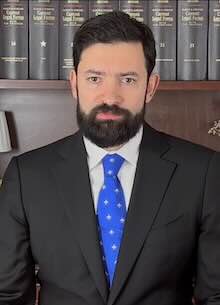
About the Author
Albert Goodwin Esq. is a licensed Florida attorney with over 18 years of courtroom experience. His extensive knowledge and expertise make him well-qualified to write authoritative articles on a wide range of legal topics. He can be reached at 786-522-1411 or [email protected].