Trust Contests in Miami, Florida
A trust contest is a legal proceeding in which an interested party challenges the validity of a trust or specific trust provisions. In Florida, trusts are governed by the Florida Trust Code, codified in Chapter 736 of the Florida Statutes. When a trust is created under circumstances involving fraud, coercion, or diminished mental capacity, Florida law provides a mechanism to contest the trust and seek appropriate remedies. The Law Offices of Albert Goodwin, PA represents clients in trust contests throughout Florida, including cases involving undue influence, lack of capacity, and other grounds for invalidity.
What Is a Trust Contest?
A trust contest is a lawsuit filed in court that challenges the legal validity of a trust instrument, whether in whole or in part. Unlike a will contest, which is initiated in probate court, a trust contest may be filed as a separate civil action or as part of trust administration proceedings. Under Florida Statute Section 736.0604, a trust is contestable if it was procured by fraud, duress, mistake, or undue influence, or if the settlor lacked the requisite mental capacity at the time of execution.
Trust contests can target the entire trust instrument or specific amendments. For example, if a settlor executed a trust amendment while suffering from dementia, a contestant may challenge only the amendment while leaving the original trust intact. This is an important distinction, as partial invalidity may still preserve the settlor's earlier expressed intentions.
Grounds for Contesting a Trust in Florida
Florida law recognizes several grounds upon which a trust may be contested. Each ground addresses a different type of deficiency in the trust's creation or execution.
Undue Influence
Undue influence is one of the most frequently asserted grounds in trust contests. It occurs when a person in a position of trust or authority over the settlor exerts excessive pressure that overcomes the settlor's free will, resulting in a trust that reflects the influencer's wishes rather than the settlor's own intent. Under Florida law, undue influence is established by showing that the alleged influencer had a confidential relationship with the settlor, was active in procuring the trust, and was a substantial beneficiary of the trust. When these elements are present, a presumption of undue influence arises, and the burden shifts to the proponent of the trust to prove that the trust was not the product of undue influence. See In re Estate of Carpenter, 253 So. 2d 697 (Fla. 1971).
Lack of Mental Capacity
Lack of mental capacity is another common ground for contesting a trust. Under Florida law, a settlor must have sufficient mental capacity at the time the trust is executed. For a revocable trust, the standard of capacity is generally the same as that required for executing a will: the settlor must understand the nature and extent of their property, the natural objects of their bounty, and the legal effect of signing the trust document. If the settlor suffered from conditions such as Alzheimer's disease, dementia, or other cognitive impairments at the time of execution, the trust may be vulnerable to a capacity challenge.
Fraud
A trust may be contested on the ground of fraud when a person intentionally makes false representations to the settlor that induce the settlor to create or modify the trust. Fraud in the inducement occurs when the settlor is misled about the circumstances surrounding the trust, while fraud in the execution occurs when the settlor is deceived about the nature of the document being signed. Both forms of fraud can render a trust or trust amendment voidable under Florida law.
Duress
Duress involves the use of threats, coercion, or intimidation to compel the settlor to create or amend a trust against their free will. Unlike undue influence, which may involve subtle manipulation over time, duress typically involves more overt conduct, such as threats of physical harm, financial ruin, or abandonment. A trust executed under duress is voidable in Florida.
Improper Execution
Florida Statute Section 736.0403 sets forth the formal requirements for trust creation. A trust of real property or a trust that is intended to be irrevocable must be evidenced by a written instrument signed by the settlor. While Florida law generally does not require witness attestation for inter vivos trusts (unlike wills), failure to comply with the applicable execution formalities can render a trust invalid. Additionally, if a trust instrument was signed by a settlor who did not actually read or understand the document, the execution may be challenged.
Who Can Contest a Trust in Florida?
Not everyone has the legal right to contest a trust. Under the Florida Trust Code, standing to contest a trust is generally limited to qualified beneficiaries and other persons who have a sufficient legal interest in the trust. A qualified beneficiary is defined under Florida Statute Section 736.0103(16) as a living beneficiary who, on the date of the determination of beneficiary status, is a distributee or permissible distributee of trust income or principal, would be a distributee or permissible distributee if the interests of current distributees terminated, or would be a distributee or permissible distributee if the trust terminated on that date.
Persons who would have been beneficiaries under a prior version of the trust or who would inherit under intestate succession if the trust were declared invalid may also have standing to contest. Creditors of the settlor or of beneficiaries generally do not have standing to contest a trust's validity.
No-Contest Clauses in Florida Trusts
Some trust instruments include no-contest clauses, also known as in terrorem clauses, which purport to disinherit any beneficiary who challenges the trust. However, under Florida Statute Section 736.1108, a no-contest clause is unenforceable in Florida. The Florida legislature has determined that public policy favors allowing beneficiaries to challenge trusts that may have been the product of fraud, undue influence, or incapacity without fear of losing their inheritance. This is a significant protection for beneficiaries who believe a trust is invalid, as they can bring a contest without risking forfeiture of their interest under the trust.
The Trust Contest Process
The process of contesting a trust in Florida typically involves the following steps:
Filing the Lawsuit. The contestant files a complaint in the appropriate Florida circuit court challenging the validity of the trust. The complaint must identify the grounds for the contest and the relief sought.
Discovery. Both parties engage in the discovery process, which may include depositions of witnesses, requests for production of documents (including medical records, financial records, and communications), and interrogatories. Discovery is often the most critical phase of a trust contest, as it allows the parties to gather evidence regarding the settlor's mental state, the circumstances surrounding the trust's execution, and the conduct of the alleged influencer.
Expert Witnesses. Trust contests frequently involve expert testimony, particularly in cases involving allegations of lack of capacity. Medical experts may be retained to offer opinions regarding the settlor's cognitive functioning at the time the trust was executed. Forensic accountants may also be retained to trace assets and identify suspicious financial transactions.
Mediation. Florida courts often require the parties to attempt mediation before proceeding to trial. Mediation provides an opportunity for the parties to reach a negotiated settlement, which can save significant time and expense compared to a full trial.
Trial. If the matter is not resolved through settlement or mediation, it proceeds to trial before a judge. Trust contests in Florida are bench trials, meaning there is no jury. The judge will evaluate the evidence and render a decision on the validity of the trust.
Burden of Proof
In most trust contests, the initial burden of proof rests with the contestant, who must present evidence sufficient to establish the grounds for invalidity. However, as noted above, in cases involving undue influence, the burden may shift to the proponent of the trust once the contestant establishes a presumption of undue influence. The standard of proof in trust contests is generally a preponderance of the evidence, meaning the contestant must show that it is more likely than not that the trust is invalid.
Remedies in a Trust Contest
If a trust contest is successful, the court may grant a variety of remedies depending on the circumstances. These may include declaring the trust or specific trust provisions void, reinstating a prior version of the trust, ordering the distribution of trust assets in accordance with a prior valid trust instrument or under intestate succession, and awarding attorney's fees and costs. In some cases, the court may also impose a constructive trust or order an accounting of trust assets.
Statute of Limitations
Florida law imposes time limitations on trust contests. Under Florida Statute Section 736.0604, a trust contest based on revocation must be brought within the time period specified in the statute. Additionally, the trustee may serve a trust disclosure document on qualified beneficiaries, which may trigger a shortened limitations period for bringing a contest. You need to act promptly if you believe a trust is invalid, as delay may result in the loss of your right to bring a contest.
Contact a Florida Trust Contest Attorney
If you believe a trust is invalid due to undue influence, lack of capacity, fraud, duress, or improper execution, the Law Offices of Albert Goodwin, PA can help. Our firm has extensive experience handling trust contests in Florida and can evaluate your case to determine the best course of action. Call us at 786-522-1411 or email [email protected] to schedule a consultation. Our office is located at 121 Alhambra Plz # 1000, Coral Gables, FL 33134.
About the Author
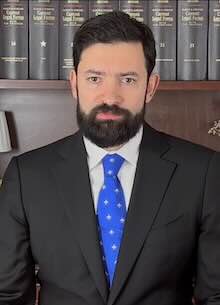
Albert Goodwin Esq. is a licensed Florida attorney with over 18 years of courtroom experience. His extensive knowledge and experience make him well-qualified to write authoritative articles on a wide range of legal topics. He can be reached at 786-522-1411 or [email protected].