Undue Influence Claims in Miami, Florida
Undue influence is one of the most common grounds for challenging the validity of a will or trust in Florida. When a person uses their position of trust, power, or authority to override the free will of a testator or settlor, the resulting document does not reflect the true wishes of the person who signed it. Florida law provides a well-established legal framework for challenging wills, trusts, and other estate planning documents that were procured through undue influence.
At the Law Offices of Albert Goodwin, PA, we represent clients on both sides of undue influence claims throughout Florida. Whether you believe a loved one's will or trust was the product of undue influence, or you are defending an estate plan against such allegations, our firm provides the experienced legal representation you need.
What Is Undue Influence?
Undue influence occurs when a person exerts such control over the mind of the testator (the person making a will) or settlor (the person creating a trust) that the resulting document reflects the wishes of the influencer rather than the free and voluntary wishes of the person who executed it. Undue influence goes beyond mere persuasion, advice, or suggestion. It involves a level of coercion or manipulation that overcomes the person's free agency and substitutes the will of another.
Florida courts have long recognized that undue influence is typically exercised in private and is rarely witnessed by third parties. Because of this, undue influence cases are often built on circumstantial evidence rather than direct proof. The totality of the circumstances surrounding the execution of the will or trust must be examined to determine whether undue influence was present.
It is important to distinguish undue influence from legitimate influence. A family member who expresses their wishes, provides advice, or even makes requests is not necessarily exerting undue influence. The key question is whether the influence was so overpowering that it destroyed the testator's or settlor's free will and substituted the desires of another person.
Florida's Burden-Shifting Framework: In re Carpenter
Florida follows a well-established burden-shifting framework for undue influence claims that has its roots in the landmark case of In re Estate of Carpenter, 253 So. 2d 697 (Fla. 1971). The Carpenter framework, which has been refined through decades of case law, provides a structured approach to analyzing undue influence claims.
Under the Carpenter framework, the analysis proceeds as follows:
Step 1: The Contestant's Initial Burden
The party challenging the will or trust (the contestant) bears the initial burden of producing evidence of undue influence. The contestant does not need to prove undue influence at this stage; they only need to produce enough evidence to raise a question about whether undue influence occurred. This may include evidence of a confidential relationship, suspicious circumstances surrounding the execution of the document, or changes in the testator's estate plan that benefited the alleged influencer.
Step 2: The Presumption of Undue Influence
If the contestant establishes certain predicate facts, a presumption of undue influence arises. This presumption is one of the most powerful tools available to challengers in Florida estate litigation. Once the presumption is triggered, the burden shifts to the proponent of the will or trust to prove, by a preponderance of the evidence, that the document was not the product of undue influence.
The presumption of undue influence arises when the contestant demonstrates that the alleged influencer:
- Had a confidential relationship with the testator or settlor
- Was active in procuring the contested document
- Received a substantial benefit under the contested document
When all three elements are established, the presumption shifts the burden of proof to the proponent, creating a significant strategic advantage for the contestant. Each of these elements is discussed in detail below.
Step 3: The Proponent's Burden
Once the presumption arises, the proponent of the will or trust must come forward with evidence to rebut the presumption. The proponent must demonstrate, by a preponderance of the evidence, that the will or trust was the product of the testator's or settlor's free will and was not procured through undue influence. This is a substantive burden, not merely a burden of production, and the proponent must present credible evidence to overcome the presumption.
The Three Elements of the Presumption
1. Confidential Relationship
A confidential relationship exists when one person occupies a position of trust, confidence, or superior knowledge in relation to another. In the context of undue influence claims, a confidential relationship may arise from a variety of circumstances, including:
- Family relationships – While family relationships alone do not automatically create a confidential relationship for undue influence purposes, the circumstances of the relationship may establish one, particularly when the testator was dependent on the family member for care, financial management, or daily needs
- Attorney-client relationships – An attorney who drafts a will or trust in which the attorney or the attorney's family members receive a substantial benefit is in a confidential relationship with the testator or settlor
- Caregiver relationships – A person who serves as the primary caregiver for an elderly or infirm individual often occupies a position of trust and confidence
- Financial advisor or agent relationships – A person who manages the testator's finances, holds power of attorney, or otherwise controls access to the testator's resources may be in a confidential relationship
- Any relationship involving dominance and dependence – Florida courts look at the totality of the relationship to determine whether one party occupied a dominant position and the other was dependent or vulnerable
Florida courts have held that a confidential relationship exists wherever one person has gained the confidence of another and purports to act or advise with the other's interest in mind. The relationship need not be formal; it can arise from the particular circumstances of the parties' interactions.
2. Active Procurement
Active procurement refers to the beneficiary's involvement in the creation or execution of the contested will or trust. Florida courts have identified several factors, often called the "active procurement factors" or "Carpenter factors," that are relevant to determining whether active procurement has been shown. These factors include:
- Presence at the execution of the will or trust
- Presence on occasions when the testator or settlor expressed a desire to make the will or trust
- Recommendation of an attorney to draft the document
- Knowledge of the contents of the document before its execution
- Giving instructions to the attorney on the preparation of the document
- Securing witnesses for the execution of the document
- Safekeeping the document after it was executed
Not all of these factors need to be present to establish active procurement. Florida courts consider the totality of the circumstances and weigh the evidence to determine whether the beneficiary played a central role in procuring the contested document. Even a few of these factors, in combination with other evidence, may be sufficient to establish active procurement.
3. Substantial Benefit
The third element requires that the alleged influencer received a substantial benefit under the contested will or trust. A substantial benefit is generally shown when the beneficiary receives more under the contested document than they would have received under a prior estate plan, under intestacy, or under what would be considered a natural disposition of the testator's or settlor's assets.
For example, if a testator had a prior will that divided the estate equally among four children, and a new will executed shortly before death leaves the entire estate to one child who was the testator's primary caregiver, the caregiver child received a substantial benefit. Similarly, if a non-family member such as a caregiver, friend, or romantic partner receives a significant portion of the estate to the exclusion of the testator's natural heirs, this element is likely satisfied.
Factors Courts Consider in Undue Influence Cases
Beyond the three elements of the presumption, Florida courts consider a wide range of factors when evaluating undue influence claims. These factors help paint a complete picture of the circumstances surrounding the execution of the contested document:
- The testator's physical and mental condition – While a person can have testamentary capacity and still be subject to undue influence, a weakened physical or mental state may make the testator more vulnerable to the influence of others
- Isolation of the testator – Evidence that the alleged influencer isolated the testator from family members, friends, or advisors is a strong indicator of undue influence
- Changes in the estate plan – Significant changes to an estate plan, particularly changes made late in life or during a period of declining health, may suggest undue influence, especially if the changes benefit the person who was closest to the testator at the time
- The testator's dependence on the beneficiary – When the testator relied on the beneficiary for care, transportation, financial management, or other essential needs, the power dynamic creates an opportunity for undue influence
- The naturalness of the disposition – A will or trust that distributes assets in a manner consistent with the testator's longstanding wishes and family relationships is less likely to be the product of undue influence than one that makes unexpected or unnatural distributions
- The involvement of an independent attorney – Whether the testator was represented by an independent attorney who met privately with the testator and ensured the document reflected the testator's own wishes
- Timing of the document – Documents executed during periods of crisis, illness, or vulnerability may be more susceptible to undue influence challenges
Undue Influence in Will Contests
Undue influence is one of the primary grounds for contesting a will in Florida. Under F.S. § 733.107, the burden of proof in will contests involving undue influence follows the framework described above. A will that was procured through undue influence is invalid and may be set aside by the court.
When a will is successfully contested on grounds of undue influence, the court may give effect to a prior valid will, or if no prior will exists, the estate will be distributed according to Florida's intestacy statutes. In some cases, only the portions of the will that were affected by undue influence may be invalidated, while the remainder of the will is upheld.
Will contests based on undue influence must be filed within the timeframes established by Florida law. Under F.S. § 733.212, an interested person who has been served with a notice of administration generally has 20 days (or 3 months in certain circumstances) to file objections to the validity of the will. Failure to file within the applicable deadline can result in the loss of the right to contest the will.
For more information about estate litigation and the probate process, visit our related practice area pages.
Undue Influence in Trust Contests
Undue influence claims are not limited to wills; they also apply to trust contests. A trust that was created or amended as the result of undue influence may be challenged and declared invalid. Under F.S. § 736.0406, a trust is void to the extent its creation was induced by fraud, duress, mistake, or undue influence.
Trust contests based on undue influence follow the same Carpenter burden-shifting framework as will contests. The contestant must establish the elements of the presumption, and if successful, the burden shifts to the proponent to prove the trust was not the product of undue influence.
One important distinction between will contests and trust contests is that trusts are often created and amended over time, and a trust may have multiple amendments. An undue influence challenge may target a specific amendment rather than the entire trust. In such cases, the court may invalidate only the amendment that was procured through undue influence, leaving the remainder of the trust intact.
Additionally, revocable trusts are increasingly used as the primary estate planning vehicle in Florida, sometimes in place of or in addition to a will. Because trust assets are not subject to probate, undue influence claims involving trusts may be filed in a separate proceeding rather than as part of the probate case.
How to Prove Undue Influence
Because undue influence is rarely exercised in the open, proving an undue influence claim requires careful investigation and the assembly of circumstantial evidence. Effective strategies for proving undue influence include:
- Deposing witnesses – Taking depositions of family members, caregivers, friends, attorneys, and other individuals who had contact with the testator or settlor during the relevant time period
- Obtaining medical records – Medical records can establish the testator's physical and mental condition, vulnerability, and dependence on others
- Reviewing financial records – Financial records may reveal the alleged influencer's control over the testator's finances and assets
- Analyzing the estate planning history – Comparing the contested document with prior estate plans can reveal suspicious changes that coincide with the alleged influencer's involvement
- Interviewing the drafting attorney – The attorney who drafted the contested document can provide critical information about the circumstances of the document's preparation and execution
- Retaining expert witnesses – Medical experts, forensic accountants, and other professionals may provide testimony that supports the undue influence claim
How to Defend Against Undue Influence Claims
If you are the proponent of a will or trust that is being challenged on grounds of undue influence, there are several strategies for defending against the claim:
- Demonstrating the testator's independent intent – Evidence that the testator had longstanding wishes consistent with the contested document, such as statements made to multiple people over a period of time, can undermine an undue influence claim
- Showing independent legal advice – If the testator consulted with an independent attorney who met privately with the testator and confirmed the testator's wishes, this is strong evidence against undue influence
- Establishing the naturalness of the disposition – If the distribution under the contested document is consistent with the testator's relationships and values, this weighs against a finding of undue influence
- Challenging the confidential relationship element – If the alleged influencer did not occupy a position of trust or dominance over the testator, the presumption cannot arise
- Rebutting active procurement – Demonstrating that the beneficiary had minimal or no involvement in the preparation and execution of the document can defeat the active procurement element
- Presenting evidence of the testator's capacity and independence – Medical records, testimony from treating physicians, and testimony from individuals who interacted with the testator can establish that the testator was mentally sharp and independent at the time the document was executed
Relationship Between Undue Influence and Other Claims
Undue influence claims are often brought alongside other grounds for challenging a will or trust, including:
- Lack of testamentary capacity – While distinct from undue influence, capacity challenges are frequently paired with undue influence claims because the same conditions that make a person susceptible to influence (cognitive decline, confusion, dependence) may also affect capacity
- Fraud – A will or trust may be challenged on grounds that the testator was deceived about the nature or contents of the document or about the circumstances of their family or beneficiaries
- Duress – A will or trust procured through threats or coercion may be challenged on grounds of duress, which is related to but distinct from undue influence
- Breach of fiduciary duty – In some cases, the person who exerted undue influence also served as a fiduciary (such as an agent under a power of attorney), and their conduct may give rise to separate breach of fiduciary duty claims
The Florida Probate Code and Undue Influence
Several provisions of the Florida Probate Code are directly relevant to undue influence claims:
- F.S. § 732.5165 – Provides that a will is void if the execution is procured by fraud, duress, mistake, or undue influence
- F.S. § 733.107 – Establishes the burden of proof in will contests, including the burden-shifting framework for undue influence claims
- F.S. § 733.212 – Sets forth the notice requirements and timeframes for filing objections to the validity of a will
- F.S. § 736.0406 – Provides that a trust is void to the extent its creation was induced by undue influence
Contact a Florida Undue Influence Attorney
Undue influence claims are among the most complex and fact-intensive disputes in Florida estate litigation. Successfully proving or defending against an undue influence claim requires a thorough understanding of the legal framework, careful investigation of the facts, and skilled presentation of the evidence.
At the Law Offices of Albert Goodwin, PA, we have extensive experience handling undue influence claims in both will contests and trust contests throughout Florida. We understand the stakes involved in these cases and are committed to achieving the best possible outcome for our clients.
If you believe a loved one's will or trust was the product of undue influence, or if you are defending an estate plan against undue influence allegations, contact us. Call 786-522-1411 or email [email protected] to schedule a consultation with an experienced Florida undue influence attorney. Time is critical in these cases. Do not delay in seeking legal advice to protect your rights.
About the Author
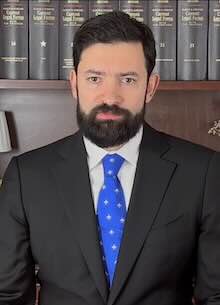
Albert Goodwin Esq. is a licensed Florida attorney with over 18 years of courtroom experience. His extensive knowledge and experience make him well-qualified to write authoritative articles on a wide range of legal topics. He can be reached at 786-522-1411 or [email protected].